

Understanding Cemetery Guidelines for Grave Markers and Memorials
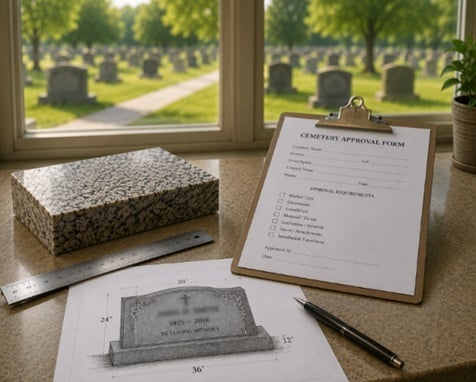
A memorial can be deeply personal, but it also needs to meet the standards of the cemetery where it will stand. Families considering cemeteries in Delmar, NY are wise to review those requirements before choosing a stone, approving an inscription, or placing an order.
Cemetery guidelines are not meant to take meaning away from a memorial. They help protect visitors, allow grounds crews to work safely, keep access routes clear, and prevent one memorial from affecting surrounding grave spaces. A few early questions can prevent a painful delay later.
Why Cemetery Guidelines Should Be the First Step
Each cemetery may set its own standards for markers, monuments, foundations, installation timing, and decorations. Two nearby cemeteries may allow very different memorial styles, even when the burial spaces appear similar.
Waiting until a design is complete can create a difficult choice. The family may need to revise a stone that already feels meaningful, change an inscription, or wait for another installation period. Starting with the cemetery’s written standards gives the memorial provider a clear set of boundaries to work within.
It also helps to confirm the burial record early. A family may know the general area where a loved one rests but not have the lot, section, grave, or niche information needed for approval. For helpful background on locating and confirming memorial information, read this guide to Albany cemetery records and memorials.
Confirm the Burial Space and Who Can Approve the Memorial
Before choosing a memorial style or inscription, gather the information needed to identify the burial space and determine who is authorized to approve the memorial. Taking these steps early can help prevent delays, misunderstandings, and design changes later in the process.
Catholic families, along with relatives and friends from other faith backgrounds, can use these guidelines to understand the memorial process together.
What Burial Space Information Should You Confirm?
Begin by confirming the exact location of the burial space, including the cemetery name, section, lot, grave number, and any other identifying details used in the cemetery’s records. Requirements can vary depending on the section, garden, religious area, or type of burial space. It is also helpful to check whether a companion or family memorial already exists or if spaces have been reserved for future use. Understanding these details early helps ensure a new marker or inscription fits the family’s long-term memorial plans.
Who Has Authority to Approve the Memorial?
Before moving forward with a design, confirm who is listed as the lot owner or who has the legal authority to approve the memorial. Many cemeteries require consent from a specific individual before reviewing or authorizing a marker. It is also important to identify the office or representative responsible for monument and marker approvals so questions can be directed to the appropriate contact. Most cemetery offices can provide a checklist of the information and documents needed to review a proposed memorial. Requesting these requirements before finalizing artwork or engraving can help avoid unnecessary revisions and approval delays.
Ask About Marker Type, Dimensions, and Placement
The physical requirements are often the most important part of cemetery guidelines. A beautiful memorial cannot be installed if its style or footprint does not fit the space.
- Permitted marker styles: Ask whether the cemetery allows flat markers, upright monuments, bevel markers, slant markers, bronze memorials, or other options in that section. Why it matters: some areas allow only markers set level with the ground, while others allow upright designs.
- Maximum and minimum dimensions: Confirm the allowed width, height, depth, and thickness. Why it matters: measurements affect the stone selection, inscription layout, and whether the memorial will fit the approved foundation.
- Orientation of the marker: Ask which direction the memorial must face and where lettering should be placed. Why it matters: placement may be tied to the cemetery’s layout, adjacent graves, pathways, or mowing patterns.
- Foundation expectations: Learn whether the cemetery has specifications for the base or foundation beneath the memorial. Why it matters: a proper foundation supports the stone and helps reduce later shifting from soil movement and seasonal weather.
- Location within the grave space: Confirm whether the marker belongs at the head, foot, or another designated position. Why it matters: even the correct style can be delayed if it is planned for the wrong area of the lot.
Review Material, Design, and Inscription Requirements
Families often focus first on names, dates, faith symbols, and personal details. Those choices deserve care, but they should be reviewed alongside the cemetery’s design standards.
- Stone materials and finishes: Ask whether the cemetery limits granite colors, polished surfaces, bronze, or other materials. Why it matters: some sections use a consistent appearance to preserve the character of the grounds.
- Lettering and inscriptions: Confirm whether the cemetery has requirements for wording, letter size, placement, or additional names added later. Why it matters: adequate space must be reserved for future inscriptions on companion or family memorials.
- Symbols, emblems, and images: Ask about religious symbols, organizational emblems, etched portraits, ceramic photographs, and decorative artwork. Why it matters: these features may need review before the design is approved.
- Vases and attached features: Find out whether built-in vases, raised ornaments, or other additions are allowed. Why it matters: attached pieces can affect maintenance access and may have separate size or placement limits.
- Approval before production: Do not assume a design is accepted until the cemetery has reviewed it when review is required. Why it matters: changing a proof is far easier than changing a completed memorial.
Families may also benefit from exploring cemetery memorial choices and inscription options before approving a final memorial design.
Catholic Cremation and Permanent Remembrance
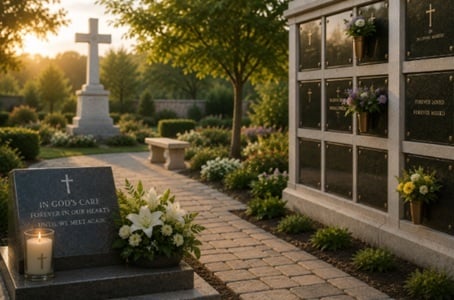
Catholic teaching permits cremation while encouraging cremated remains to be placed in a sacred and permanent resting place. Whether families choose a traditional grave, cremation garden, or columbarium niche, thoughtful planning provides a dedicated place for prayer, remembrance, and future generations.
Plan for Installation, Seasonal Conditions, and Ongoing Care
Ordering a memorial and having it installed are separate steps. Installation depends on cemetery coordination, site conditions, and whether the foundation is ready. Before moving forward, ask who is responsible for scheduling the installation, whether the cemetery coordinates directly with the memorial provider, or if the family must initiate the request. Understanding these responsibilities early can help prevent delays after the memorial is completed.
It is also important to ask how seasonal conditions may affect installation. Frozen ground, heavy rain, or scheduled maintenance can postpone work until the site is safe and accessible. Confirm whether the cemetery has specific work hours, entry points, or notice requirements for installers, as these details can help avoid unnecessary scheduling issues.
Long-term care should also be part of the planning process. Ask which cleaning methods and products the cemetery recommends, since harsh chemicals or improper tools can damage stone surfaces, lettering, or decorative elements. Finally, review the cemetery’s policies on flowers, seasonal decorations, flags, and personal tributes. Understanding these guidelines in advance helps ensure memorial items can be displayed appropriately and reduces the chance they will be removed during routine maintenance.
Create a Written Approval Record Before Ordering
A written record gives everyone the same understanding of what was approved. It is especially helpful when multiple family members, cemetery staff, and a memorial provider are involved.
Record Essential Burial Space Information
Record the exact burial-space details, including the cemetery name, section, lot, grave, and any identifying information provided by the cemetery. Keeping this information together helps ensure everyone is referring to the same location throughout the planning process.
Gather and Organize Required Documents
Keep a copy of the current cemetery guidelines that apply to the specific section, not just the cemetery’s general rules. When submitting a memorial design, include all requested information, such as dimensions, material, stone color, inscription layout, artwork, foundation details, and proposed placement. Providing complete information from the beginning can help prevent delays or unnecessary revisions.
Maintain Clear Approval Records
Keep all approval communications together, including emails, written notes, design drawings, and approved proofs. Record the name or office that provided guidance, confirm who will coordinate the installation, and ask whether the cemetery requires advance notice before work begins. Before production starts, carefully review the final proof to verify the spelling, dates, layout, symbols, and any reserved space for future inscriptions.
Planning Ahead for a Meaningful Memorial
Taking time to understand cemetery guidelines before ordering a memorial can help families avoid delays while creating a lasting tribute that reflects faith, family traditions, and cemetery requirements. With guidance from Catholic Monument Design Center, families can plan ahead with greater clarity and confidence.
As families continue exploring cemeteries in Delmar, NY, thoughtful planning can help create a memorial that honors loved ones with dignity and care. For more information about planning ahead, contact our team for advance planning guidance or call (518) 350-7678.
