

How Custom Headstone Artwork Reflects a Loved One’s Passions
How Personalized Memorial Artwork Creates Lasting Connections
A headstone serves as more than a permanent marker. It provides a place where family members can reflect, remember, and maintain a connection with someone they love. Thoughtfully selected artwork can make that place of remembrance feel more personal while preserving the dignity and peaceful character of the cemetery.
Personalized memorial designs can also carry meaning across generations. A carefully chosen image or inscription may help children and grandchildren recognize important aspects of a loved one’s life, even when their memories are limited. By balancing personal expression with timeless design, families can create a tribute that remains meaningful during future visits.
Begin with the Story They Lived
Custom headstone artwork is most meaningful when it begins with identity rather than decoration. Families considering cemeteries in Delmar, NY can use a memorial to preserve a recognizable part of the person who is buried in consecrated ground, not simply fill open space on a monument.
Start with what family members would mention first when describing the loved one. Their vocation, favorite pastime, devotion to parish life, service to others, love of gardening, music, books, sports, or time spent in a cherished place may all point toward a fitting visual direction. Everyday details often matter as much as formal accomplishments. A simple image connected to a familiar habit can bring a quiet sense of recognition during a visit.
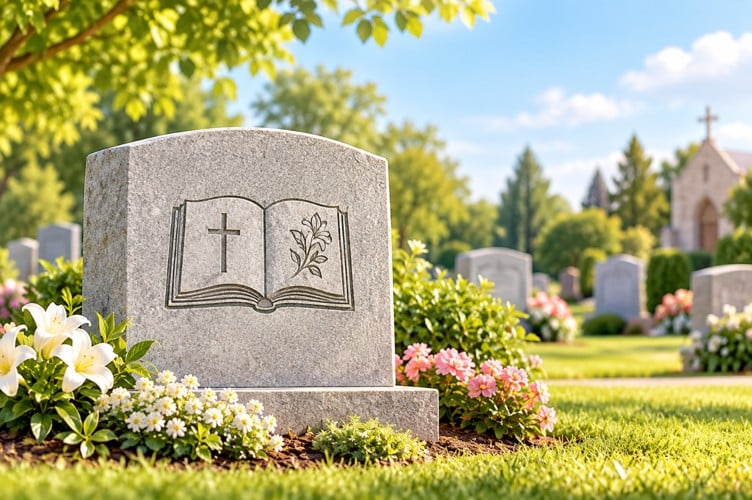
The goal is not to turn a headstone into a biography. A memorial has limited room, and the strongest designs usually hold one central idea. A teacher may be remembered through an open book. A devoted gardener may be honored with a carefully drawn rose or small arrangement of flowers. A family that begins with the person’s story has a better foundation for every later choice, from inscription wording to the placement of religious symbols.
What Belongs in a Personal Tribute?
A personal tribute should select the details that best express a loved one’s character, rather than attempting to include every interest and milestone. Begin by gathering memories, then look for the idea that appears most often or carries the deepest meaning.
Catholic families can also welcome memories and ideas from relatives and friends of other faith backgrounds. Including their perspectives can help create a personal tribute that reflects the loved one’s life while respecting Catholic memorial traditions.
Consider these starting points as your family narrows the concept:
- A meaningful role, such as parent, grandparent, teacher, veteran, caregiver, or parish volunteer
- A lasting interest, such as music, fishing, gardening, reading, woodworking, or a favorite sport
- A place or setting that held genuine importance, represented simply and respectfully
- A personal value, such as generosity, perseverance, hospitality, or devotion
- A faith symbol that reflects Catholic hope, prayer, and the promise of eternal life
- A brief phrase, Scripture passage, or wording the person was known to say
Not every memory needs its own image. If a loved one enjoyed both gardening and music, for example, a floral motif paired with a short inscription about joy may communicate more clearly than several separate pictures. The memorial should leave room for the person’s name, dates, and prayerful meaning to remain easy to read.
The same thoughtful approach applies to the burial space itself. Families considering placement and future needs may find helpful guidance on choosing a meaningful burial space for a loved one.
Turn Passions into Lasting Visual Symbols
A headstone can reflect passions through engraved imagery, carved motifs, a meaningful inscription, or a restrained combination of these elements. The right choice depends on the memorial’s size, the material, the available design area, and whether the artwork still feels clear from a respectful viewing distance.
Symbols are often more enduring than detailed scenes because they invite remembrance without requiring explanation. A musical note, a cross with a rosary, a bird, a book, a tool connected to a trade, or a flower associated with affection can carry a great deal of meaning in a small space. An inscription can add context when the image alone may not tell the full story.
Artwork should work with the monument’s overall design rather than compete with it. Strong contrast, clean lines, and open space help names and prayers remain legible. A busy composition may look appealing in a proof but lose clarity once engraved, especially when multiple visual elements are placed close together.
Hobbies Become Recognizable Motifs
Hobbies translate well when the image is simplified to its most recognizable feature. A person who loved golf may be represented by a modest club-and-ball motif. A quilter may be remembered through a small quilt pattern, while an avid reader may be honored with an open book and a line of Scripture or prayer.
Choose a motif that would be familiar to the people closest to the loved one. The image does not need to explain every detail to every visitor. Its purpose is to help family and friends pause and remember the person with affection.
Faith and Values Add Meaning
Catholic memorial artwork can connect personal identity to the faith that gives burial its deeper meaning. Crosses, praying hands, angels, the Sacred Heart, a dove, a chalice, Marian imagery, or a patron saint symbol may be appropriate depending on the family’s wishes and cemetery guidelines.
These images need not replace personal artwork. A gardener’s flowers can be arranged around a cross. A musician’s inscription can be paired with a small religious emblem. The result can honor both the life that was lived and the Christian hope entrusted to God.
How Much Detail Is Enough?
Enough detail is the amount that makes the memorial recognizable without making it crowded. One main image, one supporting symbol, and a carefully chosen inscription often create a stronger tribute than a full scene with many competing parts.
Before adding another element, ask whether it clarifies the story or merely repeats it. A proposed design should allow room for quiet reflection. Families may also honor their loved one through flowers and other personal tributes, following the cemetery visitation and decoration guidelines.
Compare Artwork Approaches Before Choosing
Different artwork approaches create different kinds of remembrance. Comparing them early can help a family choose a design that suits both the loved one and the available memorial space.
| Artwork Approach | Visual Impact | Space Needed | Type of Remembrance |
|---|---|---|---|
| Religious symbol | Clear and prayerful | Small to moderate | Faith and eternal hope |
| Hobby motif | Personal and familiar | Small to moderate | Daily interests and character |
| Nature image | Gentle and timeless | Moderate | Beauty, peace, and affection |
| Engraved scene | More detailed | Larger area | A meaningful place or activity |
| Portrait-style image | Highly personal | Larger, clear surface | Recognizable likeness |
| Inscription only | Quiet and direct | Flexible | Values, prayer, or family voice |
A portrait or detailed scene may be meaningful, but it requires enough room and a design treatment that remains clear over time. For many families, a symbol paired with thoughtful words offers the most balanced choice.
Check Cemetery Rules Before Finalizing Artwork
Custom headstone artwork should be reviewed with the cemetery before a family finalizes a design. Requirements may vary depending on the burial section, memorial type, available space, and permitted materials. Families can begin by reviewing cemetery locations and visitor maps to identify the appropriate cemetery before confirming specific memorial requirements.
Confirm Memorial Size and Placement Requirements
An upright monument may allow a different artwork layout than a flat marker or memorial plaque. The available design area may also need to accommodate existing family names, required inscriptions, or space reserved for future additions.
Families should confirm the permitted monument dimensions, materials, and placement requirements before approving artwork. Understanding these details early can help ensure the proposed design fits the selected burial space without compromising its personal meaning.
Review Artwork and Religious Symbol Guidelines
Families considering cemeteries in Delmar, NY should ask whether their preferred artwork, symbols, finishes, or decorative features are permitted. Detailed scenes, portraits, ceramic images, and additional design elements may require specific approval.
Catholic burial in consecrated ground is a prayerful act of committal. Religious symbols and personal artwork should complement the sacred setting while honoring the loved one’s individuality and the family’s wishes.
Taking time to review cemetery requirements allows families to make thoughtful design decisions with greater confidence. A memorial that balances personal expression, practical considerations, and respect for the cemetery setting can provide a meaningful place of remembrance for years to come.
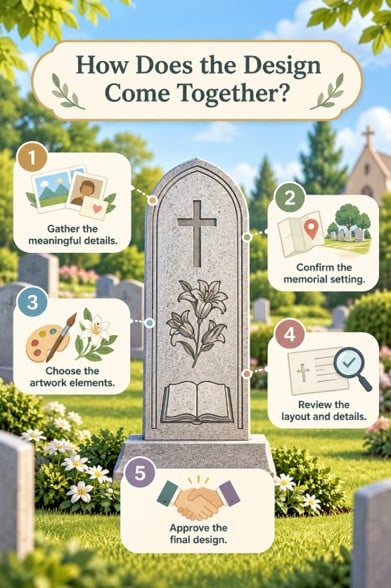
How Does the Design Come Together?
A memorial design usually comes together through a short series of decisions, with each stage depending on clear information from the one before it. Families should feel free to pause when a symbol, wording choice, or visual detail does not feel right.
- Gather the central memories. Bring a few notes, photographs, favorite phrases, or examples of symbols that reflect the loved one’s life. Focus on the details that feel most lasting.
- Confirm the memorial setting. Identify the cemetery section, memorial type, available space, and applicable guidelines before selecting artwork that may not fit the location.
- Share the desired direction. Explain whether the family prefers a religious image, hobby motif, nature detail, inscription, portrait-style element, or a combination used with restraint.
- Review the proposed layout. Check the spelling of every name and date, the wording of prayers or Scripture, the scale of the artwork, and the placement of each element. Ask whether the design will remain readable at a normal viewing distance.
- Approve only after agreement. Make sure family decision-makers have had an opportunity to review the proof. It is easier to clarify a small concern before production than after the memorial is completed.
The best final design feels personal without needing a long explanation. It gives visitors a meaningful way to remember, pray, and honor their loved one’s memory.
A carefully chosen symbol can reflect a loved one’s story while keeping remembrance rooted in faith. For families considering cemeteries in Delmar, NY, Catholic Monument Design Center can provide thoughtful guidance. Contact our team to discuss personalized headstone artwork or call (518) 589-5577 to explore memorial choices that honor your loved one’s life.
