

Creating a Lasting Tribute with a Custom Memorial Monument
Creating a Lasting Tribute Through Thoughtful Memorial Choices
A lasting memorial begins with the memories, relationships, and values that made a loved one’s life meaningful. For many families, faith provides an important foundation for remembrance, while personal details help preserve the individual’s unique story. Choosing a custom memorial monument offers an opportunity to bring these elements together in a tribute that future generations can recognize and appreciate.
Thoughtful planning also helps families balance personal expression with practical considerations. A meaningful monument should reflect the loved one’s identity while remaining respectful of the cemetery setting. Taking time to discuss family wishes, consider the available space, and review important details can make the design process more comfortable and purposeful.
A Memorial Begins with Meaning
A custom monument is more than a catalog selection. At cemeteries in Schenectady, NY, it can become a permanent expression of a life held in prayer, family memory, and consecrated ground.
Before comparing stone colors, shapes, or artwork, give the family a quieter starting point. Ask what the memorial should say about the person. Was faith central to their life? Were they known first as a spouse, parent, grandparent, friend, parishioner, or someone whose work and service mattered deeply?
This conversation helps prevent a common problem: trying to include every meaningful detail at once. A memorial has limited space, but it does not need to tell every chapter. It should carry the most enduring truths with reverence and clarity.
A good early decision is to name the two or three ideas that must remain visible years from now. Those ideas can guide every later choice, from the inscription to a cross, Marian image, or other meaningful symbol.
What Should the Monument Communicate?
A memorial should communicate the loved one’s identity, relationships, and faith in a few clear elements. The strongest designs do not compete for attention. They give visitors a simple, lasting way to recognize the person and remember what mattered.
Families often begin with many possible phrases, symbols, accomplishments, and memories. Start by separating essential information from personal details. Essential information identifies the person. Personal details deepen the tribute, but only those with lasting meaning should move into the final design.
A brief prayer, scripture passage, or phrase of affection may carry more weight than a long description. The language should also feel fitting for someone visiting years later, including younger relatives who may know the person mainly through family stories.
What Names, Dates, and Relationships Belong?
Names, dates, and family relationships form the foundation of a memorial. Confirm the full legal name or preferred name, birth and death dates, and any wording that identifies the person as a beloved spouse, parent, grandparent, or family member.
For a companion or family memorial, think ahead about how names will be arranged. Equal space and a balanced layout can communicate the dignity of each person without forcing later additions into an already crowded design.
Faith, Scripture, and Sacred Imagery
Catholic faith can be expressed through a cross, crucifix, rosary, sacred heart, praying hands, a saint, or a carefully chosen scripture verse. These are not merely decorative details. They point toward the Christian hope of resurrection and the promise that death does not have the final word.
Choose imagery that reflects genuine devotion rather than a symbol selected only because it fills empty space. A short verse or prayer is often easier to read and retain than several lines of text.
Personal Symbols with Lasting Relevance
Personal symbols can honor a vocation, military service, musical gift, garden, hobby, or family role when they truly belong to the person’s story. The best symbols remain understandable even to visitors who never met the loved one.
One meaningful symbol usually has greater impact than several small images. If the family plans to bring seasonal tributes, a guide to remembrance flowers and cemetery customs can also help connect visits with the memorial’s purpose.
Which Monument Style Fits Best?
The right style fits the space, communicates the intended tribute, and leaves appropriate room for inscription. A larger or more elaborate memorial is not automatically more meaningful, especially if the design becomes hard to read or does not fit the cemetery’s requirements.
The broad approaches below help families compare visual presence and practical needs before settling on details.
| Memorial Approach | Visual Presence | Inscription Space | Best Suited For |
|---|---|---|---|
| Upright monument | Prominent vertical design | Generous room | Individual or family remembrance |
| Flat marker | Low-profile appearance | Focused wording | Simple, understated tribute |
| Companion memorial | Shared design | Space for two names | Spouses or close companions |
| Family monument | Central family marker | Multiple inscriptions | Related burial spaces |
The burial space and cemetery section may narrow the available choices. Families comparing monument styles should also explore cemetery burial spaces and mausoleum options to better understand how different interment settings may influence their memorial plans.
Upright Monuments
Upright monuments offer a visible, traditional form of remembrance. Their face can provide room for names, dates, sacred imagery, and a concise inscription without placing every element too close together.
They may be especially suitable when the family wants a prominent place to gather, pray, and remember. Still, the cemetery must approve the size, placement, and design before production begins.
Flat Markers
Flat markers create a quieter profile while still providing a lasting identification and tribute. They work well when a family prefers simple wording, a focused symbol, and an uncluttered presentation.
Because the inscription area is more limited, editing matters. A shorter message, larger lettering, and one carefully chosen image usually read better than a crowded surface.
Companion Memorials
Companion memorials recognize two people within one unified design. They may be chosen for spouses, parents, siblings, or other close family members whose lives are closely joined.
If one inscription will be added later, reserve adequate space now. Planning for that future inscription can protect the design’s balance and avoid difficult compromises later.
Will the Design Remain Easy to Read?
A memorial remains meaningful when visitors can read the names and message clearly. Legibility depends on more than letter size. Inscription length, layout, contrast, and artwork all affect whether the important words stand out.
Long epitaphs often require smaller lettering or tighter spacing. That can make the memorial difficult to read over time, particularly when viewed from a normal standing distance. A shorter inscription may feel like a hard choice during planning, but it often creates a stronger finished tribute.
Give Inscriptions Room to Breathe
Leave open space around names, dates, and sacred text. Crowding words close to borders, images, or one another can make even a well-chosen message feel busy.
Before approving the inscription, families can review a few important details:
- Name and dates: Make sure the loved one’s name and important dates are accurate and easy to identify.
- Letter size and spacing: Choose lettering that remains readable without crowding the available stone surface.
- Inscription length: Keep the message meaningful and concise so important words receive proper emphasis.
- Visual contrast: Consider how the lettering and stone finish work together to support readability.
- Overall arrangement: Leave enough space between inscriptions, decorative borders, and religious symbols.
Read the wording aloud before approving it. If it feels long when spoken, it may need refinement on stone. Keep the loved one’s name as the visual center, then arrange other elements in a clear order.
Balance Artwork with Essential Information
Artwork should support the inscription, not compete with it. A cross, floral carving, or personal emblem can frame a memorial beautifully, but it should not reduce the room needed for names and dates.
Ask to see how the artwork and lettering work together in the proposed layout. A design proof can help the family notice whether the important information is still the first thing a visitor sees.
A balanced design allows meaningful symbols and essential information to complement one another, creating a memorial that remains dignified, personal, and easy for future generations to appreciate.
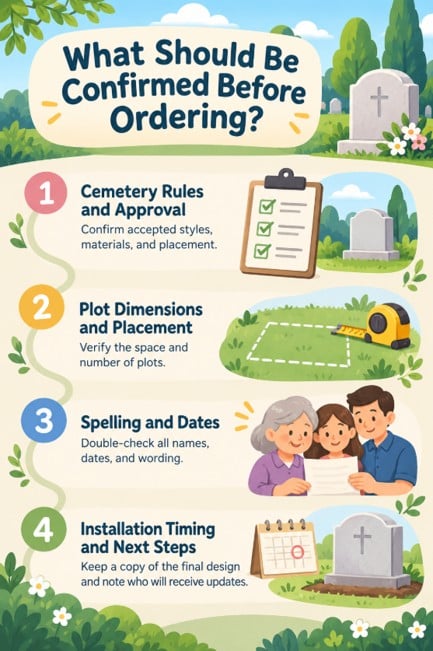
What Should Be Confirmed Before Ordering?
Before ordering a memorial, confirm the space details, cemetery approval process, final wording, and installation expectations. These checks may feel administrative, yet they protect the family from avoidable changes at a difficult time.
Use the following sequence to keep the decision organized.
1. Cemetery Monument Rules and Approval
Ask the cemetery what monument styles, dimensions, materials, and placement are accepted in the chosen section. A design should not be finalized until those requirements are understood and the cemetery approval process is underway.
2. Plot Dimensions and Placement Requirements
Verify the grave or family-space dimensions and whether the monument will mark one space or several. Placement details affect the shape, proportions, and orientation of the memorial.
3. Family Review of Spelling and Dates
Have more than one family member check every name, date, title, scripture reference, and relationship word. Read each line slowly against reliable family records. Small errors can be deeply upsetting once the monument is completed.
4. Installation Timing and Next Steps
Ask the monument provider and cemetery what steps occur after the proof is approved, including coordination for installation. Keep a copy of the final design and note who will receive updates if several relatives are involved.
Catholic Monument Design Center can explain what information is helpful to gather before a family approves a design. Bringing cemetery details early can make the conversation more productive.
How Do Families Make One Shared Decision?
Families can approach memorial planning more peacefully when they agree on priorities before debating design preferences. Start with the loved one’s own wishes, if known, then identify the essential elements, such as names, faith expression, and family relationships. Reviewing the cemetery visitation and memorial guidelines can also help families understand important considerations when planning a respectful tribute.
Choose one person to gather comments and one final reviewer to confirm the approved wording. That does not silence others. It gives everyone a clear process and keeps last-minute changes from becoming confusing or hurtful.
If opinions differ over an image or phrase, return to one question: Does this reflect the person with dignity and lasting relevance? The answer often makes the next step clearer.
Honoring a Loved One Through a Lasting Memorial
A custom memorial monument offers families a meaningful place to remember, reflect, and honor a loved one’s life. Bring the burial-space details, correct names and dates, preferred faith or personal symbols, and any questions about the final design. Thoughtful collaboration can help create a tribute that preserves cherished memories while respecting family wishes and cemetery requirements.
For families considering cemeteries in Schenectady, NY, Catholic Monument Design Center provides compassionate guidance throughout the memorial planning process. Whether you are exploring monument styles, reviewing inscriptions, or finalizing design details, contact our team to discuss personalized memorial options or call (518) 589-5577 for assistance in creating a lasting tribute that honors your loved one’s memory.
