

Planning a Companion Headstone for Your Family’s Future Needs
Why Plan a Companion Headstone Before It Is Needed?
A companion headstone gives two people a shared place of remembrance, usually with names and life dates arranged on one memorial. Planning it ahead of time is not about making assumptions. It provides an opportunity to make meaningful choices together while both voices can be heard.
Families considering cemeteries in Delmar, NY can discuss wording, faith symbols, family history, and the type of legacy they want the memorial to carry. Making these decisions earlier can also reduce the number of choices children or other relatives may need to make during a future loss.
The lasting value is not only in the stone itself. A dedicated resting place gives family members somewhere to visit, reflect, and remember over the years, whether the family chooses traditional burial or permanent placement for cremated remains.
Start with the Burial Space and Cemetery Requirements
The burial space should guide the memorial design from the beginning. Before selecting a particular size, shape, or material from a photograph or display example, confirm what is permitted for the specific cemetery section.
Confirm the Space and Memorial Guidelines
Begin by verifying whether the plot is intended for one or two interments and whether a companion memorial can be placed there. Existing family rights or burial records may also need to be reviewed before a design moves forward.
Families should then review cemetery and memorial options to understand requirements that may affect the marker’s placement, dimensions, material, foundation, or orientation. Standards can vary between cemetery sections, so a memorial that is appropriate in one area may not necessarily be permitted in another.
Understand the Installation Process
Ask what information the cemetery requires before placement and who coordinates the installation. Seasonal weather, ground conditions, and cemetery scheduling may also influence when work can proceed.
Confirming these details early can help prevent a family from choosing a memorial that later requires significant design changes.
Create a Memorial That Represents Two Lives
A companion memorial should feel shared rather than generic. It does not need to represent every part of two lives, but the design can communicate something meaningful about the individuals and the connection between them.
Marriage, family, faith, service, a favorite prayer, a meaningful place, or an important shared value can provide direction. Some families may prefer a simple arrangement of names and dates, while others may want religious imagery, floral elements, a short verse, or another personal detail.
Balance Individual Preferences Within One Design
Two people do not need to have identical preferences for a companion memorial to feel unified. One person may prefer simple lettering, for example, while the other values a small religious symbol or a phrase about family.
The design can incorporate those differences without becoming crowded. Focusing on a few meaningful elements can help both individuals receive appropriate recognition while maintaining a balanced overall appearance.
Plan Names, Dates, and Future Inscriptions Thoughtfully
A companion headstone can be planned before both inscriptions are complete. In many cases, information for one person may be engraved while an intentionally balanced area remains available for another name and dates in the future.
Reserve Future Inscription Space from the Beginning
The amount of open space should account for a complete name, birth and death dates, and other wording the family expects to include. Depending on the memorial shape, names may appear side by side, vertically, or around a shared religious or decorative symbol.
Planning the complete layout early helps future information appear as part of the original design rather than something added wherever space happens to remain.
Choose Wording That Can Carry Forward
A short phrase, scripture passage, family name, or other shared wording can remain meaningful for decades. Families should be cautious about filling available space with wording that may limit future inscription options.
Before engraving is approved, carefully check spelling, initials, maiden names, punctuation, dates, and capitalization. Having another relative review the final information can also help identify an error before it becomes difficult to correct.
Choose Design Elements with Long-Term Readability in Mind
A memorial can be personal while remaining easy to read. Letter size, spacing, engraving depth, decorative details, and available open space all influence how clearly the finished monument communicates names and other important information.
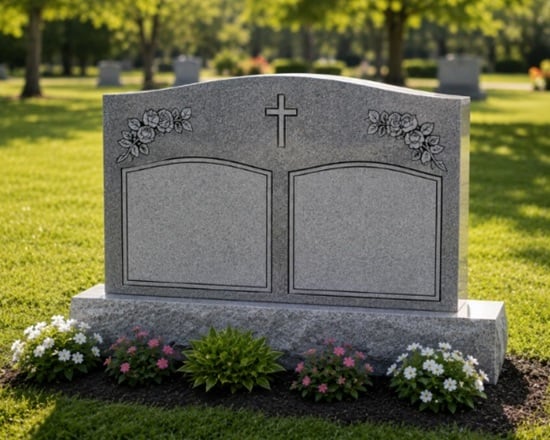
Keep Names and Inscriptions Easy to Read
Fine details may look attractive when viewed closely on a design proof but become less noticeable outdoors. Names and dates should remain clear from a normal standing distance, particularly once the monument eventually contains two complete inscriptions.
Very ornate lettering can also compete with readability. The goal is not to remove personality from the design but to ensure that the people being remembered remain its primary focus.
Use Personal Details with Purpose
Religious emblems, flowers, military imagery, photographs, nature scenes, and other symbols can add meaning when they have a clear connection to the individuals. Limiting competing elements can keep the memorial from feeling visually crowded.
Outdoor conditions should also be considered. Weather, moisture, biological growth, and routine grounds care can affect a memorial over time, making clarity and simplicity valuable parts of long-term planning.
Review the Plan Before Final Approval
The final review brings the family’s preferences, cemetery requirements, and future inscription plans together. Rather than treating the design proof as a formality, review the details carefully before approval.
- Verify cemetery requirements. Confirm the approved size, style, material, placement, and installation expectations.
- Check inscription details. Review names, dates, spelling, punctuation, symbols, and lettering.
- Examine future inscription space. Make sure the reserved area is sufficient and visually balanced.
- Understand what happens next. Confirm the ordering, approval, and installation process.
- Keep the records together. Save the approved design, cemetery information, correspondence, and notes about future inscriptions.
Keeping these records accessible can help relatives understand what was intended if another inscription needs to be arranged years later.
Catholic Cremation and Companion Memorial Planning
Families choosing Catholic cremation may still want a companion memorial that provides a permanent place for prayer and remembrance. Depending on how cremated remains are interred, a shared memorial can help identify the resting place while maintaining a connection between two people.
Before selecting the design, confirm what the cemetery permits for the specific interment space. Families may then consider how names, dates, Catholic symbols, prayers, or other expressions of faith can be incorporated without limiting space for future information.
Gravestone Restoration and Existing Family Memorials
Planning a companion headstone may also bring attention to older monuments within the same family plot. Weather exposure, biological growth, previous repairs, and natural aging can affect stone surfaces, lettering, and carved details over time.
Preserve Older Memorials with Appropriate Care
Gravestone restoration may help preserve inscriptions, religious symbols, and other meaningful features while respecting the original character of an aging monument. Before cleaning, repairing, or altering older stone, families should confirm cemetery policies and seek appropriate professional guidance.
Older memorials can be more fragile than they appear. Using unsuitable cleaning products, repair materials, or techniques may cause permanent damage, making careful evaluation particularly important.
Create a Shared Memorial with the Future in Mind
A companion headstone can provide more than a future marker. Thoughtful planning can create a permanent place that reflects two lives while giving future generations somewhere meaningful to visit and remember.
Families can plan ahead for a companion memorial when considering future inscriptions, cemetery requirements, and shared design preferences. For personalized guidance, contact Catholic Monument Design Center at (518) 589-5577.
Common Questions About Companion Headstones
What Makes a Headstone a Companion Headstone?
A companion headstone honors two people within one shared memorial. It commonly provides space for two names and each person’s dates, along with wording or design elements that reflect their relationship.
Can We Plan the Memorial Before Both Inscriptions Are Needed?
Yes. A companion memorial can be designed with space reserved for future information. Creating a balanced layout from the beginning helps later engraving fit naturally within the original design.
Can Cemetery Rules Affect Our Design Choices?
Yes. Cemetery requirements can affect memorial size, style, material, placement, and installation. Confirm the current standards for the specific burial space before approving the final design.
