

Single, Companion, and Family Burial Spaces in Schenectady
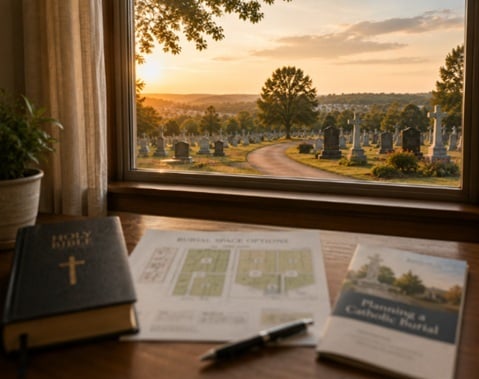
For Catholic families comparing cemeteries in Schenectady, NY, the main burial space choices are single, companion, and family spaces. A single space usually serves one person, a companion space is planned for two, and a family space keeps several relatives near one another. The right choice depends on faith, family structure, future decisions, and how much guidance you want to leave behind for the next generation.
The Choice Is Really About Who Needs to Be Remembered Together
When families first ask about burial spaces, they often think the question is only about “how many spaces.” In practice, it is also about relationships. Who has promised to be buried together? Who may feel hurt if they are left out? Who will visit and pray there ten or twenty years from now?
Catholic burial gives these choices a deeper meaning. We are not just setting aside land. We are choosing a place of prayer, remembrance, and hope in the Resurrection, ideally within consecrated ground where the Church’s care continues after death.
One non-obvious issue is that “equal” does not always mean “peaceful.” Adult children sometimes assume every branch of the family should be treated the same, but burial plans usually work better when they follow real bonds, caregiving history, parish life, and the wishes of the people being buried.
Single Burial Spaces Are Simple, but Not Always Small Decisions
A single burial space may be the best fit for a widowed parent, an unmarried adult, a religiously active family member, or someone who wants a clear and modest plan. It can also help when one spouse is already buried elsewhere, or when family members live in different regions.
The practical benefit is clarity. When one person’s place is chosen in advance, the family is not forced to make every decision during the days right after death. That kind of timing can make even simple choices feel heavy.
Still, a single space should not be treated as a leftover decision. We encourage families to ask whether nearby space matters, whether a future marker should mention family ties, and whether cremated remains may someday be placed in the same general area if allowed by cemetery policy and Catholic teaching.
A helpful next step is to compare location, memorial options, and faith considerations before emotions are running high. If your family is sorting through local burial decisions, this guide to burial and memorial options near Schenectady can help frame the conversation.
Companion Spaces Help Couples Plan with Less Guesswork
Companion spaces are most often chosen by spouses who want to rest together. For many Catholic couples, that choice reflects the sacrament of marriage and a shared life of prayer, family, sacrifice, and forgiveness.
There are different ways companion placement may be arranged, depending on the cemetery and the section. Some are side by side. Others may be designed in a paired format that uses space differently. The important point is to ask how the final memorial will read, how visitation will feel, and what choices will remain after the first death.
Here is something families often miss: the first spouse’s burial can limit the second spouse’s options if the plan was not made clearly. A rushed choice made after one death may leave the surviving spouse with a place that feels disconnected or does not match what they quietly hoped for.
Companion planning is also a gift to adult children. It removes the awkward question of whether Mom and Dad “would have wanted” to be together. If you are ready to talk through companion placement with someone who understands Catholic family concerns, Catholic Monument Design Center can help families comparing companion burial spaces discuss their long-term wishes early, allowing future decisions to reflect both faith and family priorities.
Family Spaces Keep Generations Close with Thoughtful Planning
Choosing the right burial space can be deeply meaningful. Family burial spaces allow parents, children, grandparents, or extended relatives to share a place of remembrance. For families with strong parish roots in Schenectady, this can feel like keeping the household of faith visible across generations.
But family spaces need more conversation, not less. We have seen families assume that “the family plot” automatically answers every future question. It does not. Someone still needs to know who may be buried there, how spouses are included, and what happens if one branch of the family moves away or chooses another plan.
Another experience-based insight: family spaces work best when one calm person writes down the shared understanding. Not a formal document here, just a clear family note that says who the space was intended for and why. That simple step can prevent confusion years later.
Family spaces can also help younger relatives reconnect with Catholic burial traditions. A child who visits grandparents in consecrated ground learns that the body is treated with dignity and that death is not hidden away. That lesson often lasts longer than we expect.
Families exploring cemetery headstones, monuments, and grave markers in Schenectady, NY often consider how memorial placement and monument design will reflect family traditions for generations. Similar planning conversations are common for families in Albany, NY and Delmar, NY.
Preserving Family Memorials Over Time
Choosing burial spaces is only one part of creating a lasting family legacy. Existing memorials also benefit from ongoing care. Gravestone restoration can help preserve inscriptions, symbols, and craftsmanship so future generations can continue visiting and honoring loved ones in a meaningful setting.
Where Cremation Fits in Catholic Burial Planning
The Catholic Church permits cremation, but it still teaches that cremated remains should be treated with the same dignity as the body and placed in a sacred, permanent resting place. Keeping remains at home can feel comforting at first, yet it often creates hard questions later when the next generation does not know what to do.
This is where planning matters. Some families choose traditional burial. Others explore Catholic cremation planning options while selecting a permanent resting place that reflects their faith. The key is to make sure the choice reflects Catholic belief, not just convenience or pressure from relatives who may not understand the Church’s guidance.
A less obvious concern is timing. When cremated remains are not placed promptly, the decision can drift for years. Acting early gives the family a place to visit, pray, and remember. Waiting often turns one decision into a burden passed to children or grandchildren.
Catholic Cremation and Permanent Remembrance
Catholic teaching permits cremation while encouraging cremated remains to be placed in a sacred and permanent resting place. Whether families choose burial or cremation, thoughtful planning provides a dedicated place for prayer, remembrance, and future family visits while honoring Catholic traditions.
A Realistic Family Scenario We See Often
Picture three adult siblings in the Schenectady area. Their mother has died, and their father is living but frail. One sibling wants a single space for their mother right away. Another says their parents should be together. The third asks whether there should be room for the family later.
No one is being difficult. They are each protecting something real: urgency, marriage, and family memory. The problem is that grief makes every option sound like a judgment on someone else’s love.
In that moment, the best question is not “Which space is best?” It is “What decision will still make sense when Dad dies, when grandchildren visit, and when the family gathers for prayer?” That question usually points toward a companion or family plan, unless there are strong reasons for a single space.
A Few Local Questions Families Often Ask
Are Catholic cemeteries different from other cemeteries?
Yes, in purpose and spiritual meaning. Catholic cemeteries serve as consecrated places where burial is connected to the Church’s prayer, the dignity of the body, and hope in eternal life. Some non-Catholic cemeteries may have Catholic sections, but families often choose a Catholic cemetery because the whole setting reflects the faith.

Are there cemeteries in New York City?
Yes, New York City has many cemeteries, including Catholic, public, historic, and community burial grounds. Families sometimes ask this when relatives are split between the Capital Region and downstate New York. The better question is where loved ones will be remembered, visited, and prayed for most faithfully.
Choosing While You Still Have Room to Think
Burial planning is often easier when families have time to talk openly and consider what matters most. Whether choosing a single, companion, or family burial space, thoughtful planning can help preserve faith, reduce uncertainty, and create a lasting place of remembrance for future generations.
As families compare cemeteries in Schenectady, NY, thoughtful planning can help protect faith, family traditions, and future remembrance. For more information about planning ahead, contact our team for advance planning guidance or call (518) 350-7678.
