

Finding Capital District Burial Records and Cemetery Visits
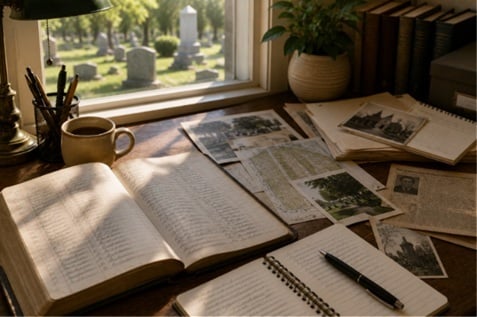
A burial record search often begins with less information than families expect: a partial name, an approximate year of death, or a story passed down through generations. For families researching cemeteries in Schenectady, NY, that is still enough to begin, as long as the search is patient and organized.
Records are not always held in one central place. A cemetery may keep interment information, while a religious institution, archive, funeral home, municipal office, or historical organization may hold related details. Online indexes can be helpful, but they are not complete records of every person buried in the Capital District.
When a Burial Record Search Starts with Gaps
Early in the process, focus on collecting what your family knows before trying to settle every detail. Write down full names, nicknames, maiden names, possible spellings, estimated birth and death years, places of residence, religious affiliation, military service, and names of spouses, parents, or children.
A family story may point to the right community without identifying the exact cemetery. For example, knowing that a relative lived in Schenectady County and attended a particular parish can narrow the search, but it does not prove where the person was laid to rest. Treat each detail as a lead that needs support from a record.
Acting early helps preserve information that may exist only in relatives’ memories. Waiting can make a search harder when older family documents, photographs, obituaries, and personal recollections are no longer available.
Problem: the Person Does Not Appear in an Initial Search
A missing result does not necessarily mean the burial location is unknown. It usually means the first search was too narrow or the available index used different information.
Search Using Different Name Variations
Search a formal name, common nickname, middle initial, maiden name, and alternate spellings. A record may list “William,” while the family knew him as “Bill.” Trying multiple versions of a name can uncover records that would otherwise be missed.
Expand the Date Range
Death dates and burial dates are not always the same. If the exact year is uncertain, search several years before and after the family’s estimate to account for recording differences or delayed interments.
Consider Changes in Family Names
Marriage, adoption, immigration, and other family circumstances can affect how a person was recorded. Women may appear under either a maiden name or married surname, so checking both can improve your chances of finding a match.
Account for Transcription Errors
Older handwritten registers can be difficult to read, and typed or online indexes may contain transcription mistakes. A single letter, number, or abbreviation can change search results, so try alternate spellings whenever possible.
Look Beyond the Expected Location
A loved one may have been buried near a spouse’s family, in a former hometown, within a church community, or in an existing family plot rather than where they last lived. Expanding your search to nearby communities may reveal additional possibilities.
Problem: You Found a Possible Match but Cannot Confirm It
This is the on-time stage of a search. You have a lead, but not enough proof to tell a family member that the grave is certainly theirs. Similar names are common, especially across several generations.
Use the details around the name, not the name alone:
- Compare dates carefully. Check whether birth, death, or burial dates fit the person’s known age and family timeline.
- Review nearby burials. Family members are often interred in the same plot, row, section, or cemetery. Nearby surnames can support a match, though they are not proof by themselves.
- Check family connections. A spouse, parent, child, sibling, or known hometown may help separate two people with the same name.
- Gather supporting material. Obituaries, death notices, funeral cards, church records, family Bibles, photographs of markers, and older correspondence can all add useful context.
- Ask what identifiers are available. Record custodians may be able to compare plot location, age, residence, next of kin, or the name of the person who arranged the burial.
Avoid changing a memorial inscription or sharing a claimed burial location widely until the match is reasonably confirmed. A careful pause now can prevent confusion later, particularly when relatives disagree about the family history.
Problem: You Do Not Know Who Holds the Record
When you are looking for a clearer answer, it is helpful to identify the organization most likely to maintain the records instead of searching random websites. Burial information is often spread across several sources, with each preserving a different part of a family’s history. Cemetery offices may maintain burial registers, section maps, lot records, and grave location information, while funeral homes may have historical arrangement records, depending on the age of the burial and the records they have retained.
Religious institutions may also preserve sacramental, parish, or congregation records related to a funeral or burial. In some cases, municipal offices can direct families to local death records or historical resources. Libraries, archives, and historical organizations may provide additional information through newspapers, city directories, local histories, maps, and genealogical collections. Taking the time to contact the most appropriate source can often provide more accurate information and help move your search forward with greater confidence.
Begin with the cemetery if you have a likely name or location. If you do not, start with the strongest family clue, such as a place of worship, obituary, or known residence. If you are also exploring permanent memorial choices after confirming a burial location, burial and memorial options near Schenectady can provide additional guidance as you plan your next steps.
Problem: You Want to Visit but Are Unsure What to Expect
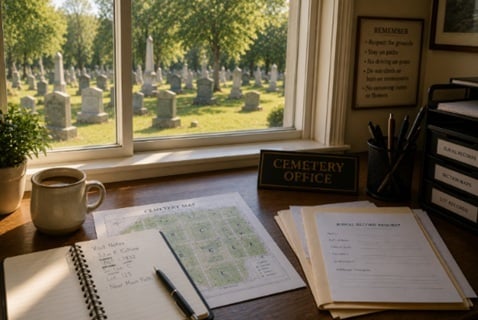
A cemetery visit can help confirm a section, see a family plot, or simply create space for remembrance. Before leaving home, take a few practical steps that make the visit easier on you and respectful to others.
- Confirm access details directly. Ask the cemetery about current visiting hours, entrances, office availability, and whether staff can help with a location.
- Bring the information you have. A full name, possible dates, section or lot details, and a printed map can be more useful than a phone search in an unfamiliar area.
- Prepare for the grounds. Wear stable shoes, dress for changing weather, and expect uneven terrain, wet grass, snow, or limited shade depending on the season.
- Follow posted rules. Respect gates, driving directions, designated parking areas, and any guidance about flowers or personal tributes.
- Protect markers and grounds. Do not climb, lean on, rub, move, or attempt repairs on a monument. Older stone can be unstable even when it appears solid.
If you find a marker that may belong to your family, photograph it from a respectful distance and note the section or nearby landmarks. Those details can help you verify the location later without disturbing the site.
When to Ask for Additional Help
Ask for guidance if your search continues to return conflicting results, plot information remains unclear, multiple relatives appear to match the same record, or family members disagree about what the evidence means. It is also helpful to seek assistance before planning a cemetery visit, especially if you need help interpreting a cemetery map or understanding cemetery guidelines.
Cemetery staff and record custodians can explain what information they may have available, what details can improve the accuracy of your search, and whether another local resource may be worth exploring. Catholic Monument Design Center can also help families understand how a confirmed burial location may influence future memorial planning.
For families searching cemeteries in Schenectady, NY, a careful records search and respectful cemetery visit can transform an uncertain family history into a meaningful connection. If you are ready to discuss a grave marker or memorial after confirming a loved one’s resting place, speak with our memorial planning team or call Catholic Monument Design Center at (518) 589-5577.
