

Common Burial Terms Families Hear When Planning a Cemetery Visit
A cemetery visit can be easier when you understand the words used to describe a burial place, memorial, and its location. For families visiting cemeteries in Albany, NY, knowing a few common terms can reduce confusion when locating a loved one’s resting place or discussing memorial arrangements.
Terminology can vary somewhat from one cemetery to another. Still, understanding the basics can help families ask clearer questions, identify the correct burial space, and communicate more effectively with cemetery staff. It can also make conversations about permanent placement and memorialization easier to understand.
Start with Common Burial Space Terms
Families do not need to memorize every term used in cemetery records. A few basic definitions can make it easier to understand where a loved one is interred and how that location may appear in cemetery records.
- Burial plot: A designated area of cemetery ground intended for burial.
- Grave: The specific location where a person is buried.
- Lot: A larger cemetery area that may contain several burial spaces.
- Grave space: An individual burial location within a plot or lot.
- Section: A named or numbered area used to organize cemetery grounds.
- Interment: The permanent placement of a person’s remains, including traditional burial or approved placement of cremated remains.
Before visiting or making arrangements, ask how the cemetery identifies individual locations. Terminology and recordkeeping systems may differ, so understanding the terms used by that cemetery can make future visits easier.
Understand Memorial and Grave Marker Language
Memorial terminology can also sound similar even when the words describe different features. Families learning how burial and memorial options differ may find it helpful to understand a few distinctions before discussing a design.
What Is the Difference Between a Headstone, Marker, and Monument?
A headstone generally identifies an individual grave and often displays a person’s name and dates. A marker is a broader term for something that identifies a burial location and may be upright or installed closer to ground level.
A monument is typically a more substantial memorial and may be designed for an individual, companion, or family. Cemetery requirements can determine which styles, dimensions, and materials are permitted.
What Does an Inscription Include?
An inscription is the wording placed or carved on a memorial. It may include a person’s name, dates, family relationship, religious wording, or another meaningful message.
The amount and placement of inscription space can depend on the memorial design. Families planning for a companion or family memorial may also want to consider whether additional names or dates could be added later.
Common Cemetery Terms at a Glance
Cemetery terminology can be easier to understand when similar terms are grouped together. This quick reference separates common burial and location terms from words families may hear when discussing memorials and cemetery services.
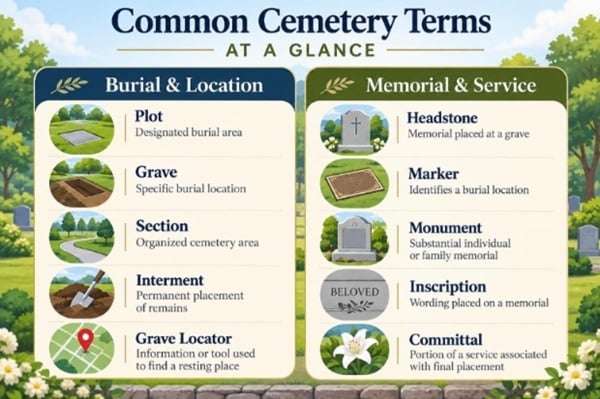
Families do not need to memorize every definition before a cemetery visit. Becoming familiar with these basic terms can make it easier to follow cemetery records, ask questions, and understand the information provided by cemetery staff.
Use Cemetery Information to Locate a Loved One
Knowing cemetery terminology becomes especially useful when families are trying to locate a specific resting place. Cemetery records may identify a location through a combination of section, block, lot, or grave numbers rather than by a person’s name alone. The original article also identifies maps, cemetery records, and grave locators as common ways families may find the correct location.
Check Cemetery Records Before Visiting
Cemetery records may contain a person’s interment information and exact burial location. Having the person’s full name and approximate date of death can help when requesting assistance.
If section, lot, or grave information is already available, keep those details together so they are easy to reference during the visit.
Use Maps and Location Details
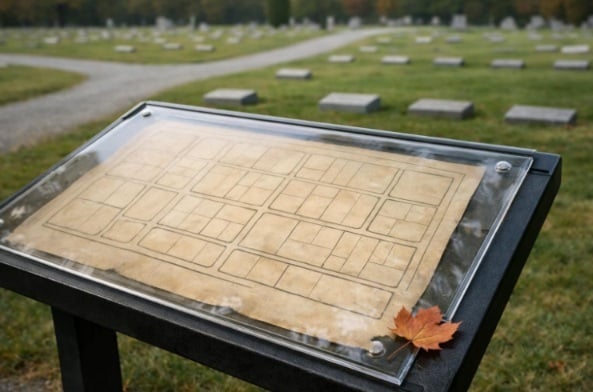
A cemetery map may show sections, roads, landmarks, and lot groupings. Combining the map with available section, lot, or grave information can make the resting place easier to locate.
Not every cemetery uses the same recordkeeping system, so families should confirm which location details are most useful before arriving.
Keep Information for Future Family Visits
Once the location is confirmed, keep the cemetery name, section, lot, grave number, and other useful details together. This can make it easier for relatives to locate the resting place during future visits.
Families can also explore permanent placement and memorial options when considering how a loved one will be remembered and where family members can return for future visits.
Prepare Before Visiting Cemeteries in Albany, NY
A little preparation can make a cemetery visit easier, particularly when relatives are unfamiliar with the grounds. Instead of trying to remember every cemetery term, focus on gathering the information most useful for the visit.
- Confirm the grave location. Bring the person’s full name and any available section, lot, or grave information.
- Check visitor access. Confirm cemetery hours, entrances, parking, and any seasonal conditions that may affect the visit.
- Review decoration guidelines. Ask about flowers, containers, seasonal decorations, and removal policies before bringing items to the gravesite.
- Ask about planned services. If a graveside or committal service is involved, confirm timing, access, and cemetery coordination in advance.
Keeping these details together can make the visit more manageable and provide useful information for relatives who may return in the future. These practical considerations carry forward the original draft’s visitor-preparation guidance while condensing the six-item checklist. Pasted text
Prepare for a More Informed Cemetery Visit
Understanding a few common cemetery terms can make it easier to ask questions, locate a loved one’s resting place, and discuss memorial choices with greater clarity. Families do not need to know every term before visiting. A basic understanding, along with the correct location information, can often provide the confidence needed to ask the right questions.
For help understanding memorial terminology or asking questions about cemetery and memorial planning, contact Catholic Monument Design Center at (518) 589-5577 for thoughtful guidance related to cemeteries in Albany, NY.
