

How to Choose a Family Burial Plot for Loved Ones

Key Takeaways
- Begin with the people, faith values, and future plans the family wants the space to serve.
- A family burial plot can take different forms, so confirm the cemetery’s arrangements before choosing a location.
- Compare access, surroundings, nearby relatives, and the section’s character during a visit.
- Record plot details and share them with the relatives who may need them later.
- Catholic burial in consecrated ground gives families a place for prayer, remembrance, and committal.
Choosing a family burial plot starts with deciding who belongs in the plan, not with selecting the first available space. Families considering cemeteries in Schenectady, NY should first agree on the purpose of the burial place: a shared resting place for spouses, a place near parents or siblings, or a longer-term plan for several relatives.
A well-chosen family space supports both practical needs and Catholic tradition. It creates a permanent place of committal in consecrated ground, where loved ones can be remembered in prayer and visited over time. The steps below help families make the decision carefully, before grief or time pressure makes details harder to sort out.
Family Burial Plot Goals
A family burial plot should begin with three decisions: who may be included, whether the need is immediate or planned ahead, and what matters most to the family. Those choices shape the location, the type of space, and the memorial options that may work later.
Some families want a companion arrangement for two spouses. Others hope to keep parents, adult children, or several generations near one another. A “family plot” does not always mean one large, identical arrangement. It can refer to adjoining graves, spaces in the same section, a shared memorial area, or another layout allowed by cemetery guidelines.
Faith should be part of the discussion, not an afterthought. Catholic burial honors the dignity of the person, commends the deceased to God, and gives relatives a sacred place for remembrance. If cremation is chosen, the Church permits it when it is not chosen for reasons contrary to Christian faith, and the remains belong in a cemetery, columbarium, or other sacred place.
Planning in advance gives relatives time to compare options without making a rushed decision. Planning after a death may still be thoughtful, but it usually requires faster conversations among people who may have different expectations.
Who Should the Plot Accommodate?
The plot should accommodate the people the family intends to include, while leaving room for changes in family circumstances. Start with the immediate household, then consider whether proximity to parents, siblings, or other relatives is an important part of the decision.
Consider Immediate and Extended Family Needs
A useful conversation includes spouses, adult children, and anyone likely to handle arrangements later. Ask whether the plan is meant only for a couple or whether relatives may wish to be nearby. Do not assume that every family member will make the same choice, but identify the relationships that matter most.
Catholic families may also include relatives and friends from different faith backgrounds in these conversations. Understanding each person’s wishes can help everyone participate respectfully while preserving the family’s Catholic burial traditions.
It also helps to separate present wishes from future possibilities. A parent may prefer to rest near a spouse, while adult children may want nearby spaces for their own households. Those preferences can change as marriages, moves, and family responsibilities change.
Clarify Future Decision-Making Responsibilities
One practical detail is often overlooked: who has authority to make decisions about the space later. The family should know whose name is connected to the cemetery records and whom the cemetery should contact if a future interment or memorial decision is needed.
Keeping this information organized and accessible to the appropriate family members can help prevent confusion and support smoother decisions when future arrangements become necessary.
Cemetery Location and Section Options
A cemetery visit turns a broad plan into a real comparison. Families should look at available sections with the same care they would bring to any lasting family decision, rather than choosing solely because an area is close to the entrance or familiar from past visits.
| Comparison Point | What to Notice | Why It Matters |
|---|---|---|
| Accessibility | Walking routes and ease of reaching the space | Supports future visits |
| Nearby Relatives | Existing family burial locations | May strengthen family connection |
| Section Character | Open space, mature memorials, or quieter setting | Affects the feel of visits |
| Memorial Setting | Nearby monument styles and placement patterns | Helps with future planning |
| Future Space | Adjoining or nearby availability | May matter for later family needs |
Ask to see the actual location rather than relying only on a map. Stand where the burial space would be and notice the route a visitor would take, the nearby memorials, and whether the setting feels fitting for the family.
The location does not need to be dramatic to be meaningful. A place that relatives can locate easily and visit comfortably may serve a family better than a section chosen only for appearance. If the family expects to bring flowers or other approved tributes, it may also help to review ways to honor loved ones at gravesites before making assumptions about what can be left there.
Available Space and Burial Rules
Confirm the permitted arrangement before selecting a space. The number and type of burials allowed, who may be interred, and which memorials are accepted can affect whether a particular area truly fits the family’s plans.
Cemetery rules are not minor paperwork. They shape what the family can do with the space over many years. A section may have particular expectations for grave markers, monuments, inscriptions, floral tributes, or the placement of additional family members. The family needs those answers before committing, especially if a shared monument or a future companion placement is part of the plan.
Ask whether the cemetery can explain the difference between adjacent individual spaces, companion arrangements, and other family-focused options. The right choice depends on the cemetery’s available space and established practices, not simply on what another family has done elsewhere.
Memorial planning deserves attention at this stage because the memorial and the burial arrangement need to work together. A family that hopes for one shared monument should know whether that design is appropriate for the chosen location. Families comparing burial and remembrance choices may also find it helpful to read about burial and memorial decisions nearby.
Do not rely on verbal assumptions passed down in the family. Ask for the cemetery’s current information in writing when possible, and review it together. That small step can make later arrangements much calmer for the person asked to handle them.
What Should You Ask During a Visit?
Ask questions that reveal how the space will work for the family over time, not only how it appears today. The most important questions concern permitted use, memorial choices, future availability, and the records relatives will need later.
A cemetery representative can help clarify matters that are easy to misunderstand, including whether nearby spaces can be considered together and what restrictions apply to the section. Bring a written list so an emotional or busy visit does not leave important questions unanswered.
Consider asking:
- Which burial arrangements are permitted in this specific section?
- Can relatives be placed in adjoining or nearby spaces if available?
- What memorial styles and inscription options are accepted here?
- What information should relatives keep after selecting the space?
- Who should the family contact for a future interment or memorial question?
The answers should match the family’s actual plan, not a vague idea of what may happen someday. If a family is uncertain about the right questions, it is reasonable to ask for guidance before making a final selection.
Selection, Documentation, and Family Communication
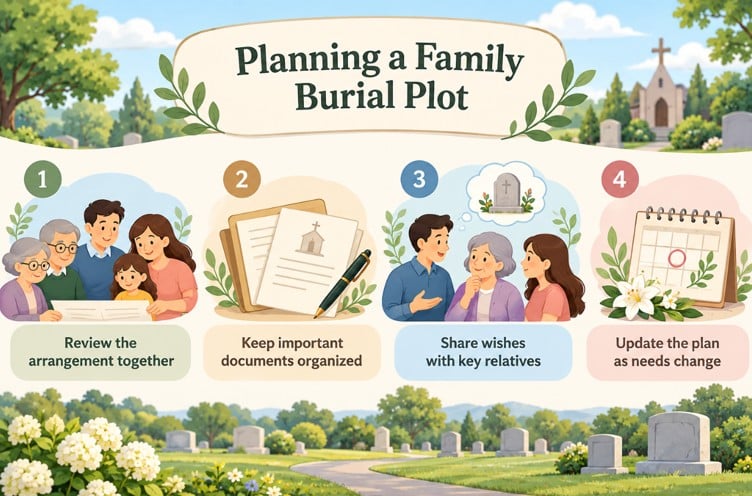
The final step is more than choosing a location. The family should review the details, preserve the records, and explain the decision to the people most likely to need the information later.
- Review the selected arrangement together. Confirm the location, intended occupants, and memorial expectations before finalizing the choice.
- Keep the paperwork in a known place. Save plot identification details, cemetery contact information, written preferences, and any notes about the memorial plan with other important family documents.
- Tell key relatives what was decided. Adult children, a spouse, or another trusted person should know where the records are kept and who to contact if arrangements are needed.
- Update the plan after major changes. A marriage, death, move, or change in family wishes may affect whether the original plan still fits.
Taking one practical step this week can help: gather the relatives who should have a voice and write down the names, relationships, and preferences that matter most. That list gives you a clearer starting point when comparing cemeteries in Schenectady, NY and asking about family burial spaces in consecrated ground. Catholic Monument Design Center is available to talk through burial and memorial choices at (518) 589-5577.
